art with heart
Paintings by Patricia
“Don’t think about making art, just get it done.
Let everyone else decide if it’s good or bad,
whether they love it or hate it. While they are deciding, make even more art.”
Andy Warhol
whispers of exotic blooms: where beauty meets mystery
In this series, I invite you into a world where flowers are not just plants, but living stories—each a rare gem whispering secrets of resilience, power, and delicate grace.
Some are endangered, their habitats vanishing under the weight of human progress. Others are deceptively beautiful, stunning to behold yet laced with poison, a reminder that not all beauty is harmless. Each one is a paradox—fragile yet fierce, alluring yet untouchable.
Through these works, I wanted to capture more than their form. I wanted to paint their essence—their resilience, mystique, and quiet warning. They are symbols of a world both sacred and threatened.
This series is a tribute to the delicate power of nature—a reminder that true beauty often carries a secret.
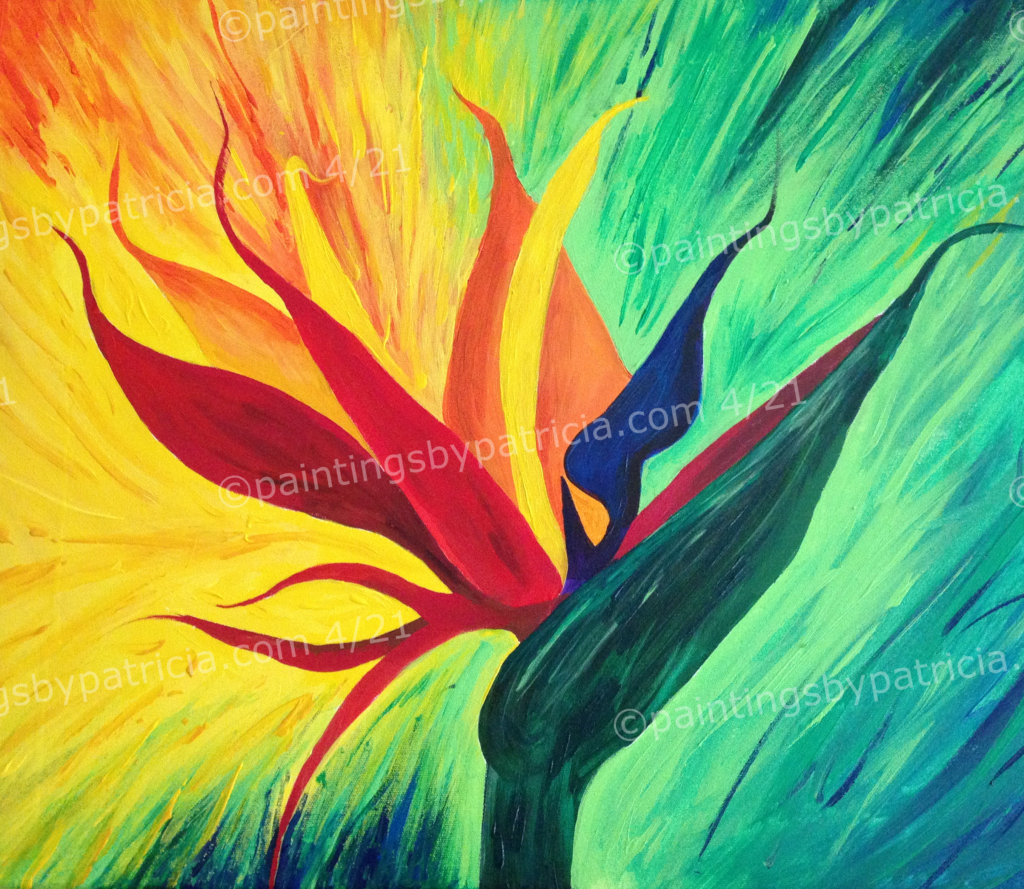
The majestic Bird of Paradise in all its glorious colours, is nature’s own celebration of flamboyance and flight. It is the floral phoenix calling us to rise, radiate, and soar beyond the ordinary. Painting the Bird of Paradise was an exploration of energy and spectacle—capturing the moment where colour and form come alive in a dance of life.
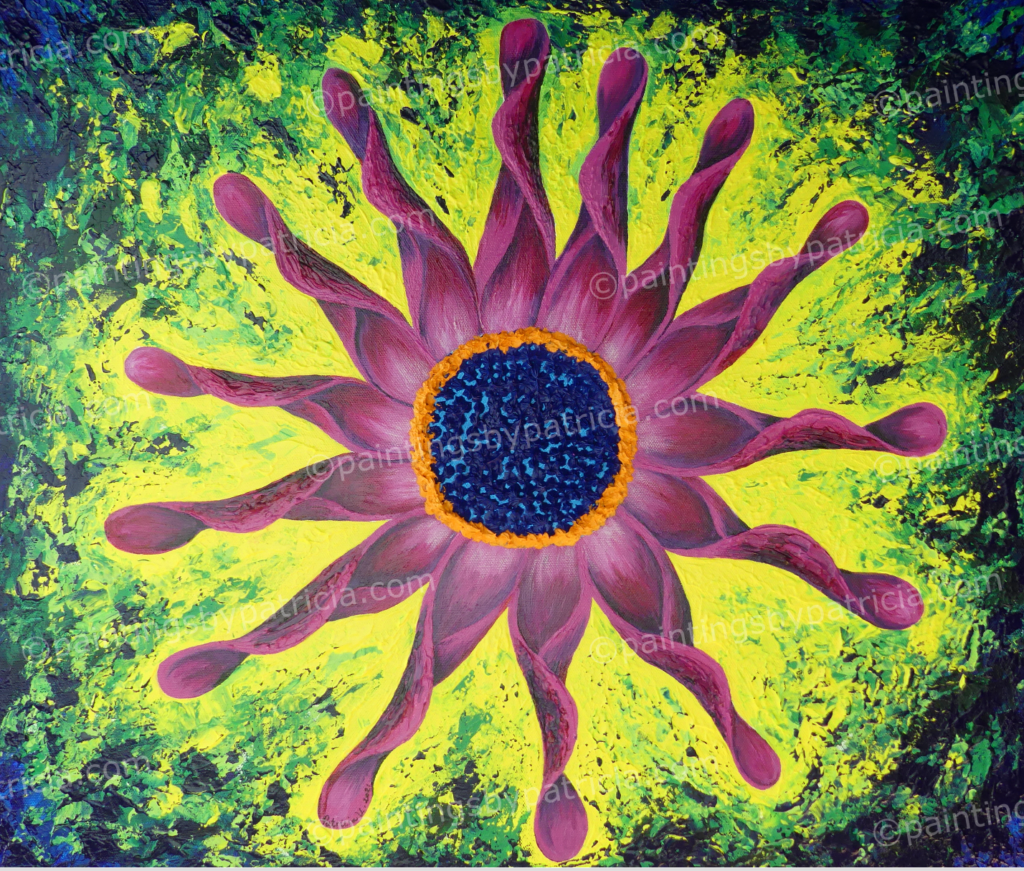
The African Daisy is a flower that endures drought, wind, and heat, blossoming boldly where others fade. It is unique for the variety of stunning bright colours and its petals that delicately close in the evening, to reopen in the morning sun, bursting boldly through adversity, a testament to tenacity and joy, reminding us that even in the toughest conditions, there is space for joy, colour, and hope.
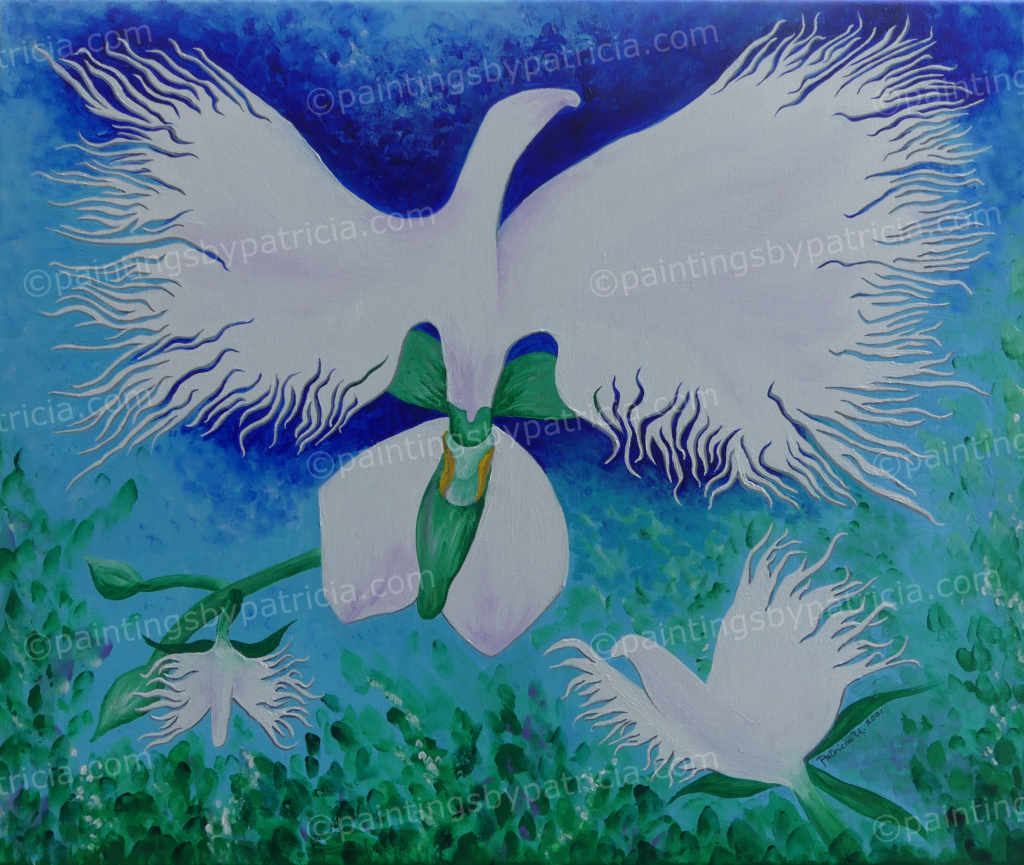
The ethereal Japanese White Dove Egret orchid, also known as the fringed orchid, lifts its petals like wings in mid-flight, bearing a striking resemblance to the White Dove Egret in flight. It dances in quiet wetlands like a fleeting spirit, fragile yet enchanting. White orchids are said to represent power, strength, love, beauty and innocence. In painting it, I imagined not just a flower, but a spirit in flight—ephemeral, untouchable, and quietly vanishing.
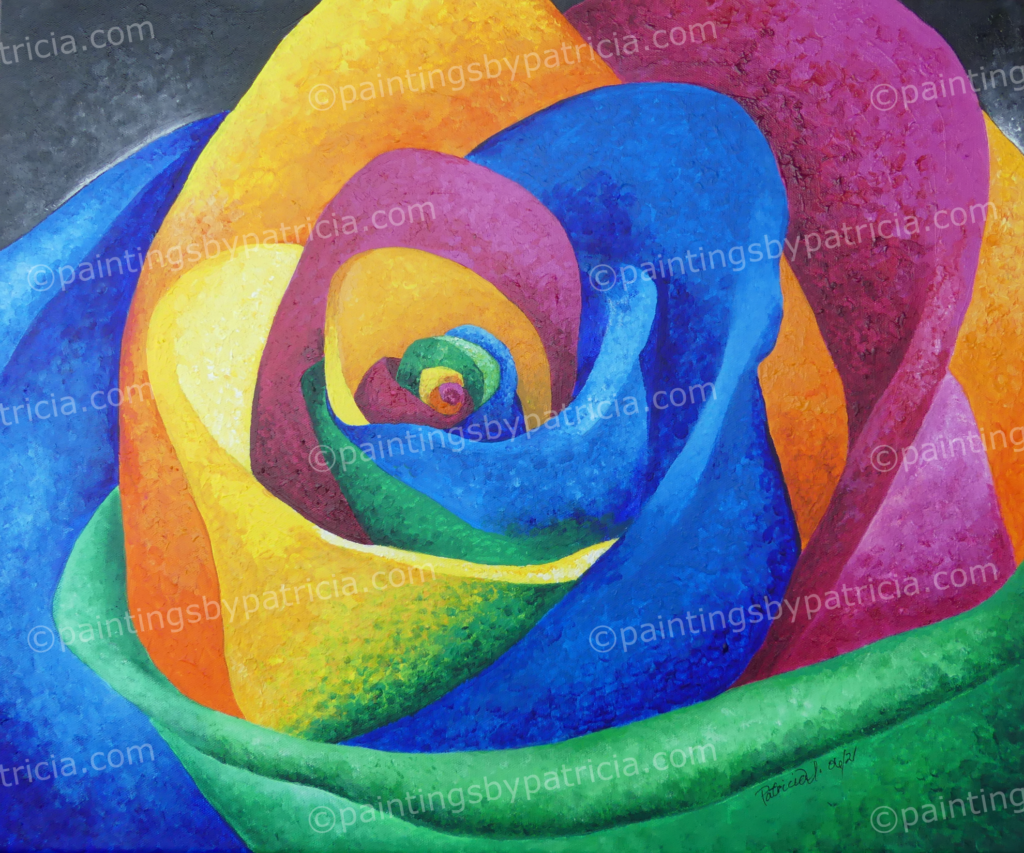
Rainbow Roses are created, not grown. A Dutch grower, Peter Van de Werkin, developed a clever way to change the colour of rose petals by immersing the flower stems in dye. Dying a rose with a single vivid and unusual colour is quite an achievement. However, creating the Rainbow Rose, in a kaleidoscope of colours, is a celebration of imagination and transformation, reminding us that beauty can be invented, that nature and human artistry can dance together in unexpected harmony.
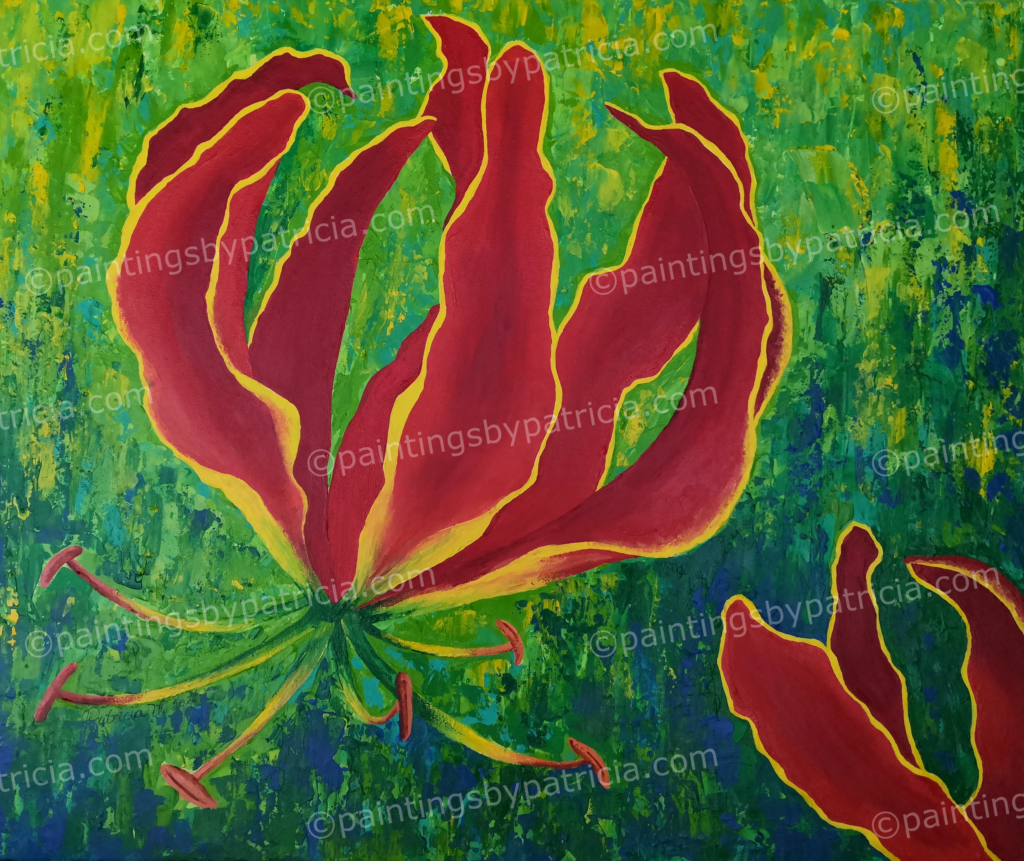
The unique Zimbabwe Flame Lily, a flower so vibrant, it seems to burn with its own inner fire, is the national flower of Zimbabwe. It flourishes in tropical and Southern Africa, in the savannah woodlands, sand dunes, and grassland in sandy loam soil, reaching up to 3 metres in height. This striking flower is protected under the Parks and Wildlife Act. It is a crime, and the punishment is severe, to pick, damage, possess or trade the Flame Lily without a permit. Poaching is threatening this glorious flower’s survival.
As beautiful as it is, the Flame Lily is more than a visual marvel—it holds a potent duality. It is highly poisonous and must be handled delicately for even touching it can cause skin irritations. However, this plant does have medicinal uses in tropical traditional medicine for it contains the alkaloid colchicine, which is effective in treating gout conditions and other ailments. Even modern medicine uses colchicine to treat gout.
In painting the Zimbabwe Flame Lily, I saw more than a flower. I saw a metaphor for strength, wild beauty, untamed spirit, but fragile power—something to be admired, respected, and never underestimated.
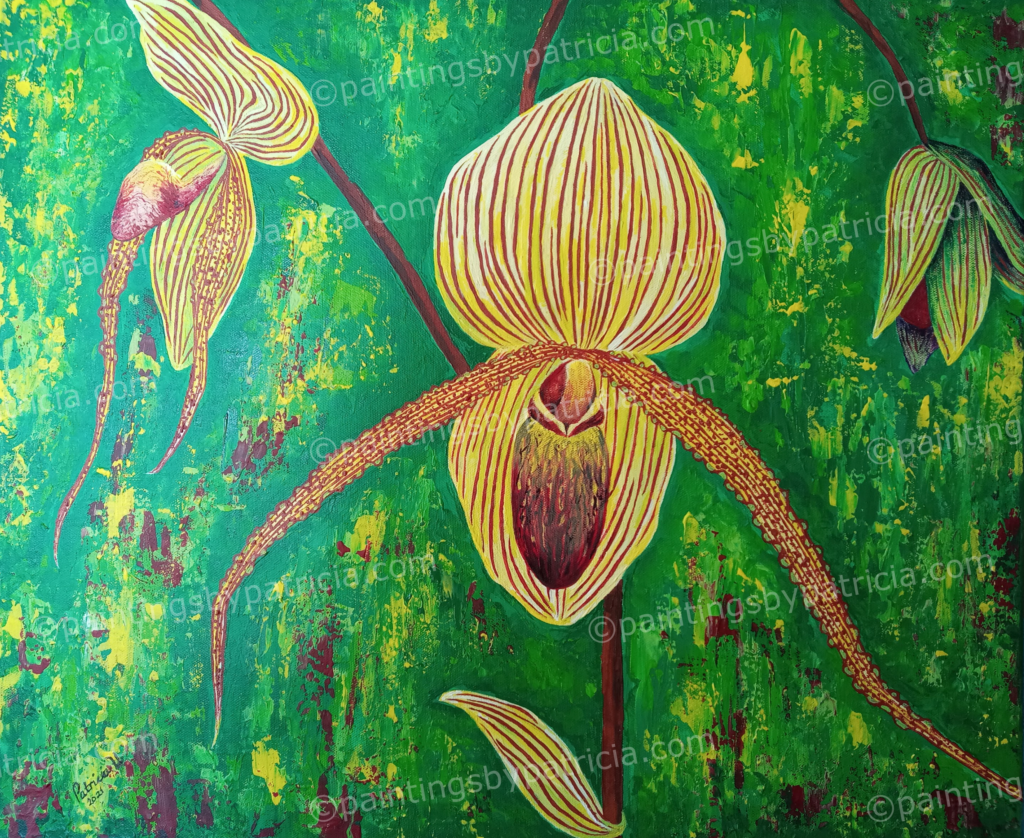
Rothschild’s Slipper Orchid, the “aristocrat of all slipper orchids”, is one of the world’s rarest flowers. It is also called the Gold of Kinabalu Orchid because it grows in the misty rainforests around Mountain Kinabalu in the Kinabalu National Park in northern Borneo and it fetches at least $5,000.00 per stem on the black market.
This extraordinary orchid, named after Baron Ferdinand de Rothschild, refuses to be rushed, for it can take up to 15 years to reveal its striped, wing-like petals and distinctive pouch, and is found at elevations from 500 to 1200 metres above sea level. It is protected by the Malaysian government since it is critically endangered due to poachers. Currently, it is estimated that there are only 50 of these rare orchids left in the world.
forever music: where colour meets sound
Music soothes our souls. It is a pulse, a mood, a language of emotion. When I paint my music-themed pieces, I do not just think in colours and shapes—I listen—a soulful jazz tune, the delicate harmony of classical music, the pulse of a modern beat, or the wild freedom of a saxophone solo. I seek to translate sound into something you can see and feel. These pieces are not just paintings—they are moments where colour meets sound, and where the listener becomes the observer. My art lives at the intersection of sound and silence, colour and emotion. Each brushstroke is a response to rhythm — a visual echo of the music that moves us.
Music, like art, is a gateway to creativity and self expression.
Lyrical Whirl captures the magic of music in motion—where staffs and notes dance fluidly around vibrant instruments, uniting them in a celebration of sound and rhythm. This piece brings the energy of a live performance into your space, radiating joy, harmony, and creative movement.
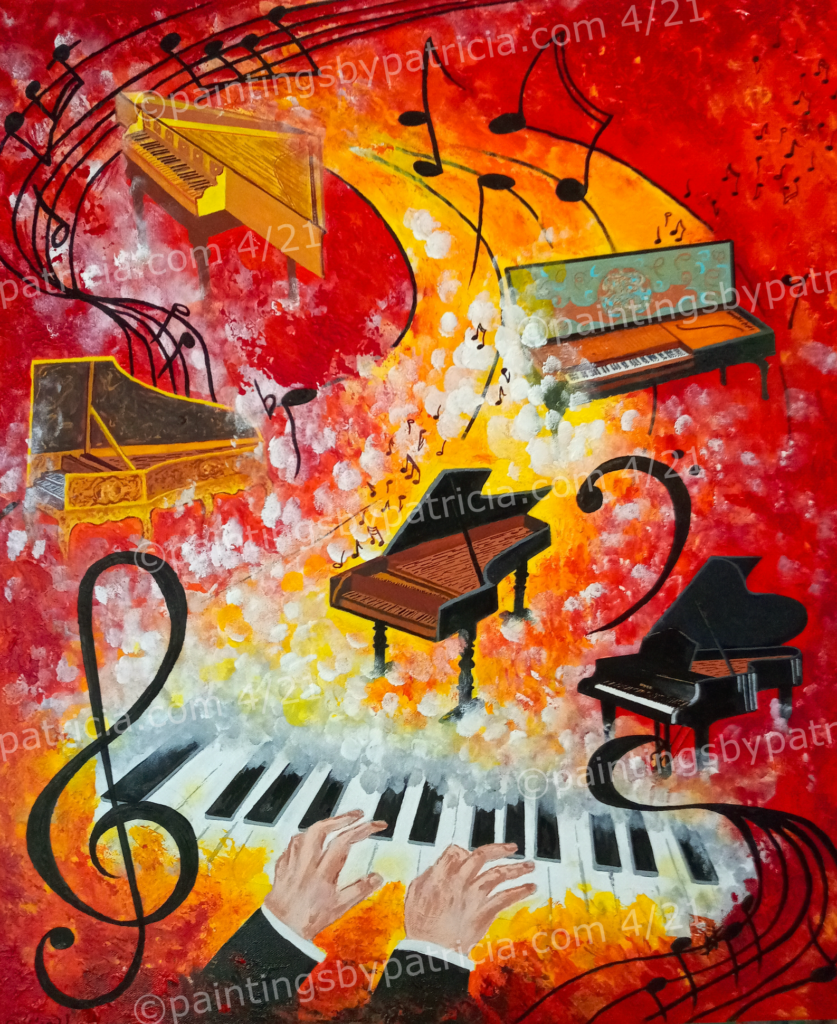
Evolution invites you on a visual journey through time, paying tribute to the early instruments that laid the foundation for today’s grand piano. This piece blends history and artistry, making it a striking conversation starter for music lovers and collectors alike.
- · Cristofori pianoforte:
Cristofori invented this forerunner of the modern piano in 1709. He replaced the plucking mechanism of the harpsichord with hammers to strike the strings thereby creating softer to louder sounds depending on the force with which the hammers were struck. - · Harpsichord:
Almost all Baroque composers wrote for the harpsichord. The oldest surviving harpsichords date from the 1500s. - · Clavichord:
The Clavichord was invented in the 14th century and was popular right through the 16th to 18th centuries. It also had hammers to strike the strings. But the sound it produced was too soft for the instrument to be used in concerts although it could produce dynamic variations such as piano, forte, crescendo and decrescendo. - · The Spinet:
The Spinet, popular in the 18th century, is a small harpsichord with the strings set obliquely to the keyboard.
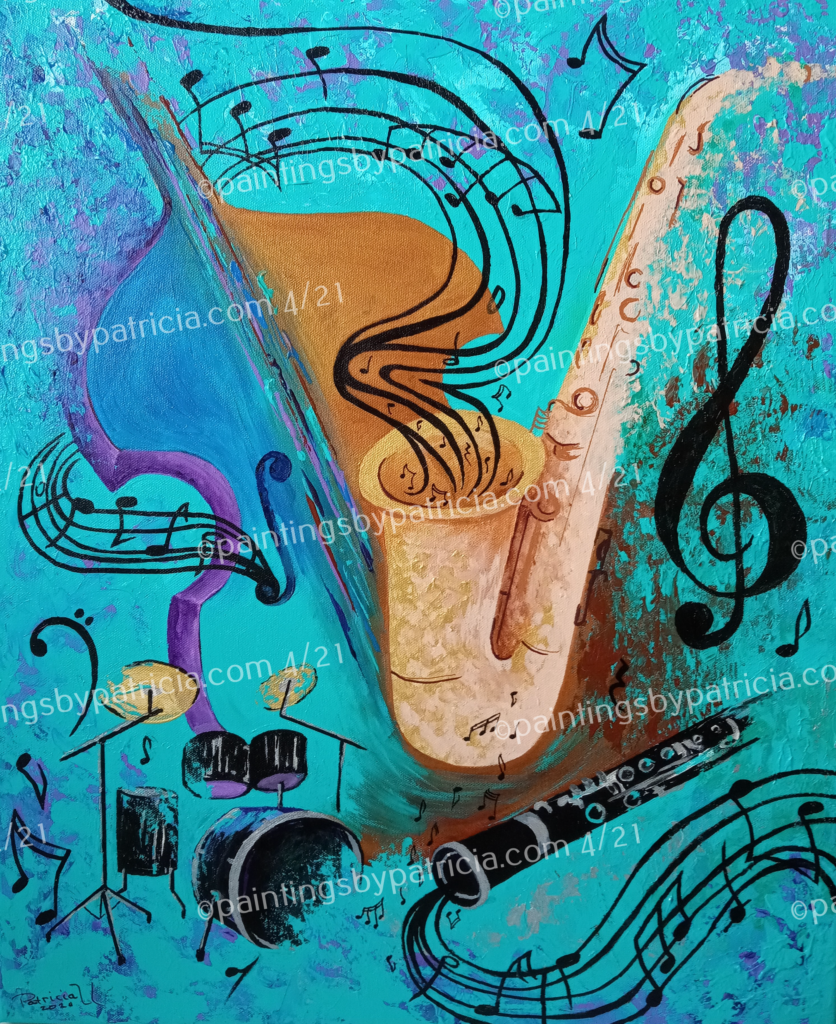
Jazz It Up is a vibrant tribute to the soul of jazz—alive with rhythm, movement, and improvisation. Inspired by the genre’s rich roots in African-American culture, this piece echoes the energy of early ragtime, the depth of the blues, and the pulse of African rhythms. With a nod to legends like Louis Armstrong, Duke Ellington, Miles Davis, and Benny Goodman, it brings the spirit of swing into your space—bold, expressive, and full of life.
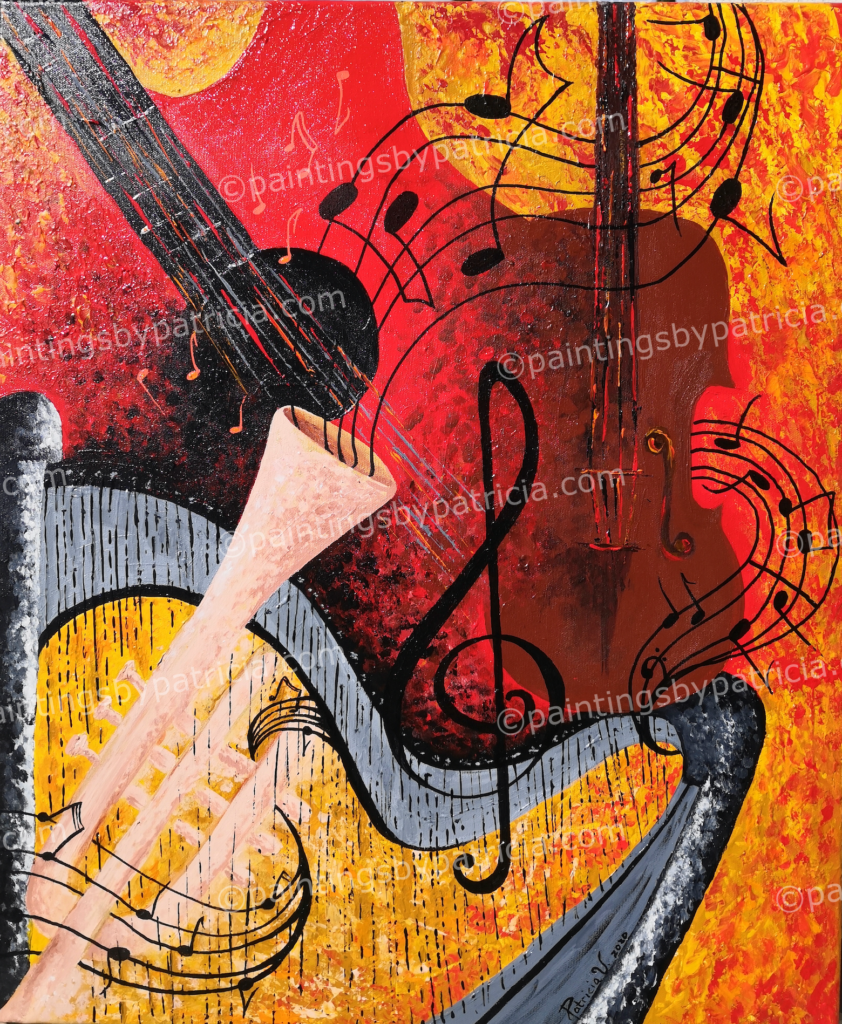
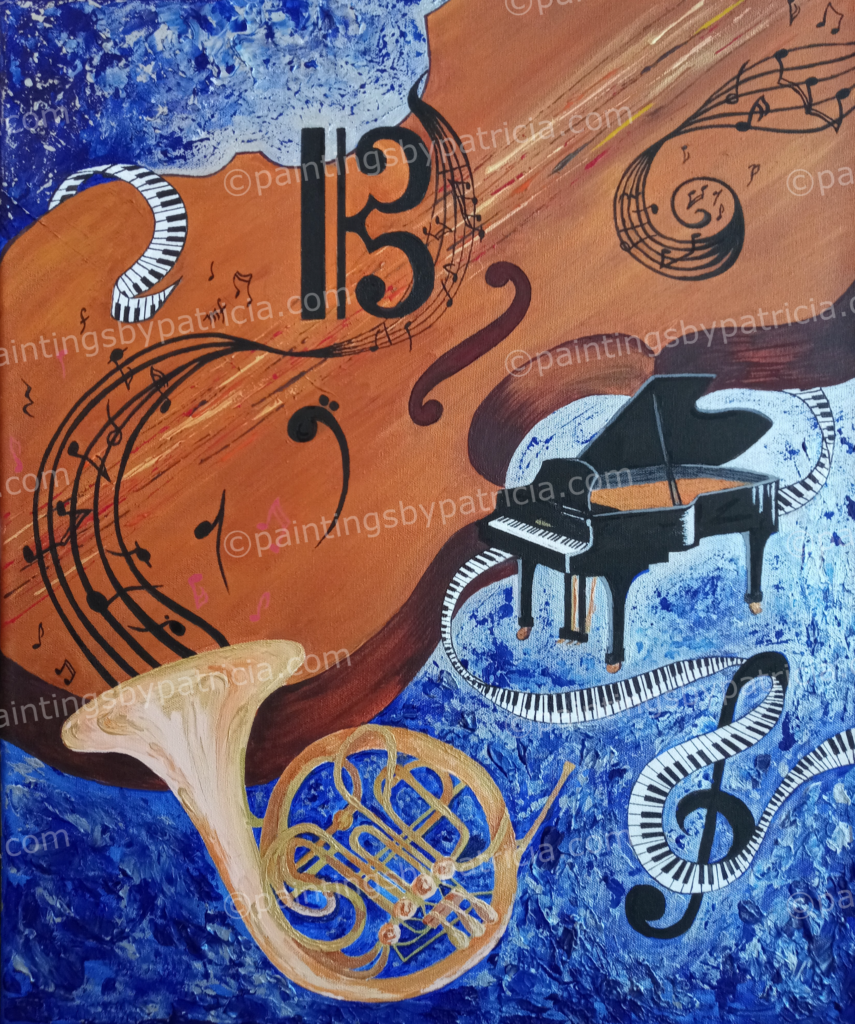
Classical Fantasia is an ode to the rich, velvety voice of the viola—a stringed instrument known for its warm, mellow tone that resonates deeper than the violin. Set against a backdrop of flowing movement and classical grace, this piece captures the soul of an often-underappreciated instrument. Inspired in part by my grandson’s exquisite playing, the painting carries a personal harmony that invites viewers to feel both the music and the memory behind each brushstroke. This painting is perfect for music lovers, classical enthusiasts, and those drawn to art with heart and history.
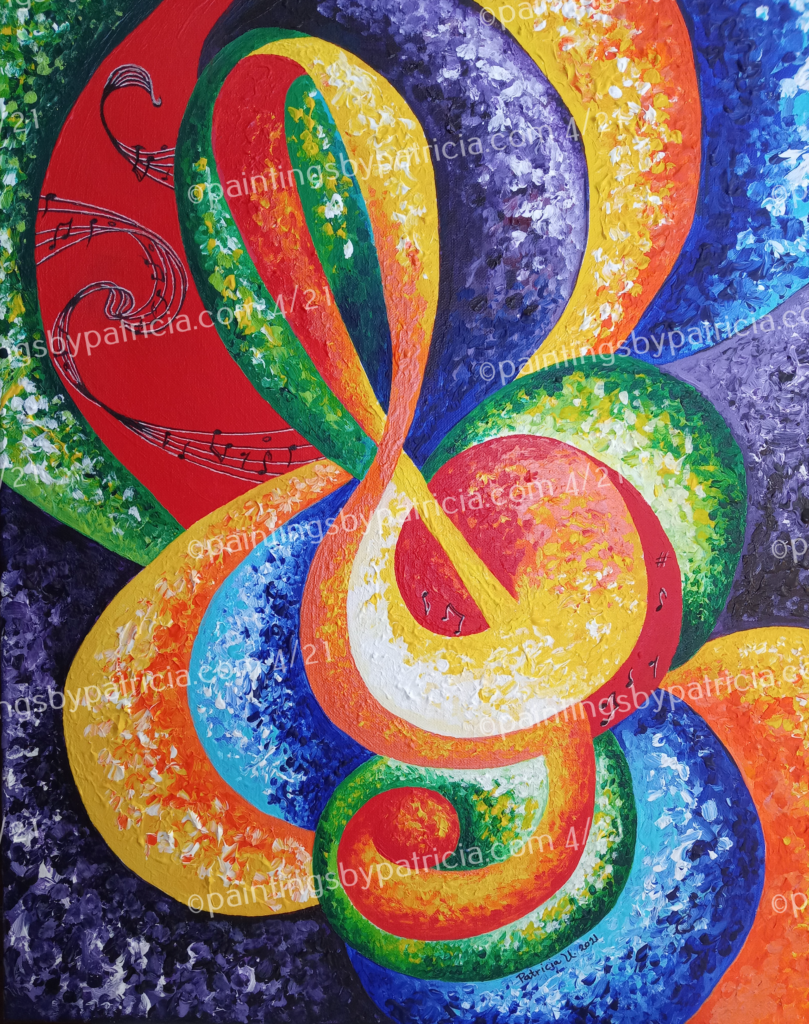
Trebling celebrates the elegant form and timeless presence of the treble clef—the graceful symbol that leads melodies in both voice and instrument. Flowing with curves and rhythm, this piece pays tribute to the clef most often heard in pianists’ right hands and in the soaring notes of sopranos and altos. A visual symphony of movement and musicality, it is perfect for those who appreciate the beauty of music, both seen and heard.
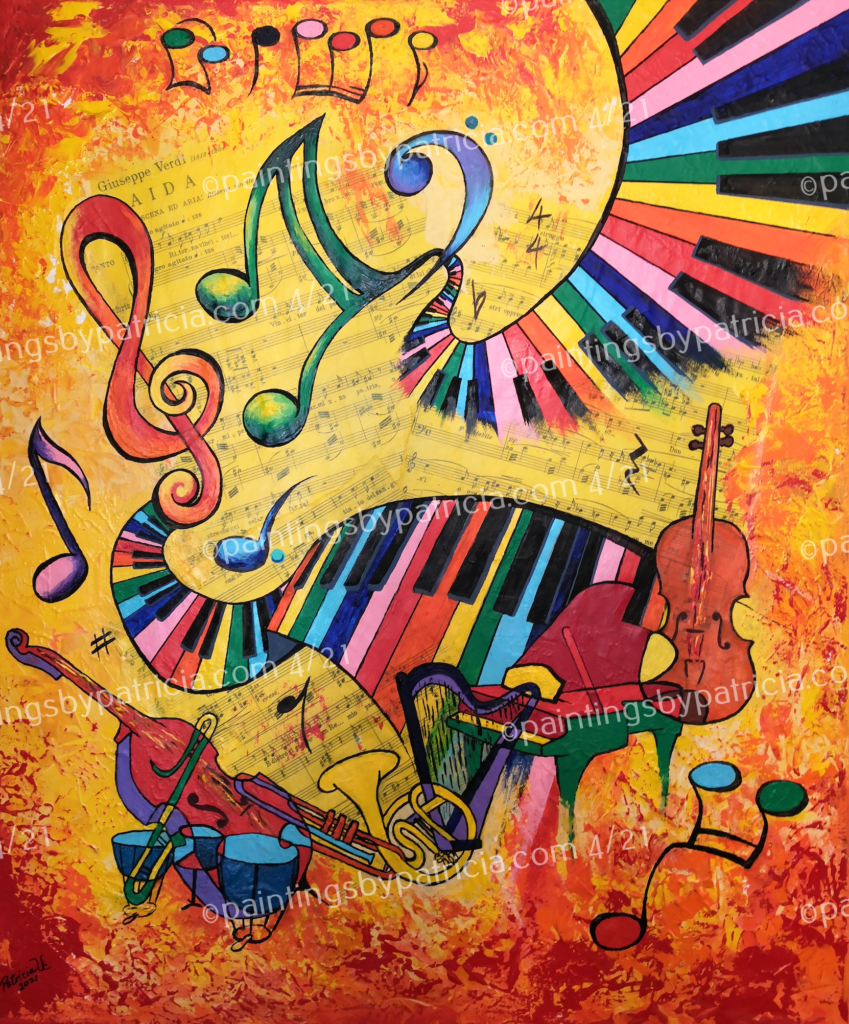
Musical Harmony weaves together classical tradition and playful imagination. The backdrop features sheet music from Verdi’s powerful aria ‘Ritorna vincitor’ from Aida, subtly layered beneath a golden wash. But it’s the vibrant, rainbow-hued keyboard—dreamed up by my granddaughter—that brings a joyful, modern twist. Her simple suggestion, “why not use rainbow colours?” added a touch of whimsy and wonder. This piece bridges generations, blending operatic drama with childlike creativity—a perfect harmony of depth and delight.